

Posts from July 28th, 2025
Subscribe and receive email notifications of new blog posts.
 RSS Feed
28
Collier Cone and Collier Glacier is a Challenging Central Oregon Hike on the Pacific Crest Trail
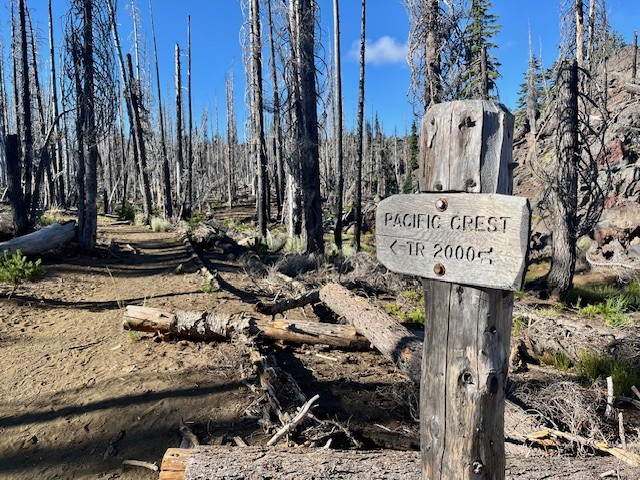
The Pacific Crest Trail Abuts Collier Cone
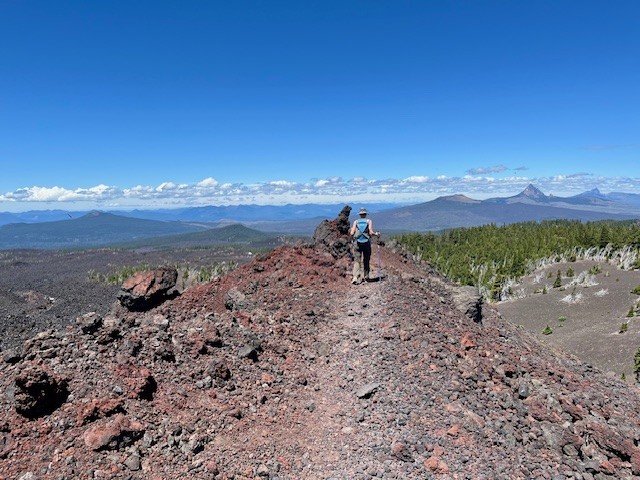
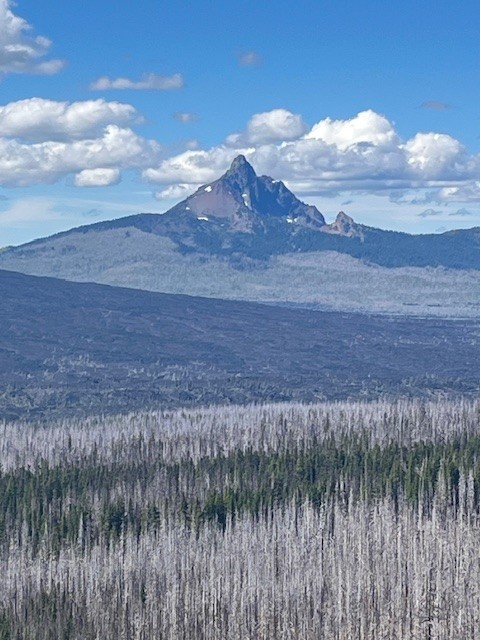
It is estimated that hundreds of thousands of people hike sections of the Pacific Crest Trail each year, but only a few hundred succeed in completing the entire 2650 +- miles. In Central Oregon, the PCT runs next to the Cascade Mountains, with sections on the east side and other sections on the west side of the seven prominent peaks. Collier cone is next to North Sister with Collier Glacier lying in the saddle between North and Middle Sister abutted on the west by Little Brother. Over the years the glacier has been in retreat with the greatest loss prior to 1950. The wet winter and cooler spring experienced in 2025 compared with 2023 appears to reflect more snow and more water in the glacial lake later in the summer.
Access to Collier Cone can be found through hiking the Obsidian Trail, Four in One Cone, or through Lava Camp Lake. All approaches come with at least seven miles one direction which is why there are few people who visit Collier Glacier. Even though the PCT runs right next to Collier Cone, climbing to the moraine bordering the lake takes another third of a mile one direction, which is probably why few PCT hikers take the time to see the view.
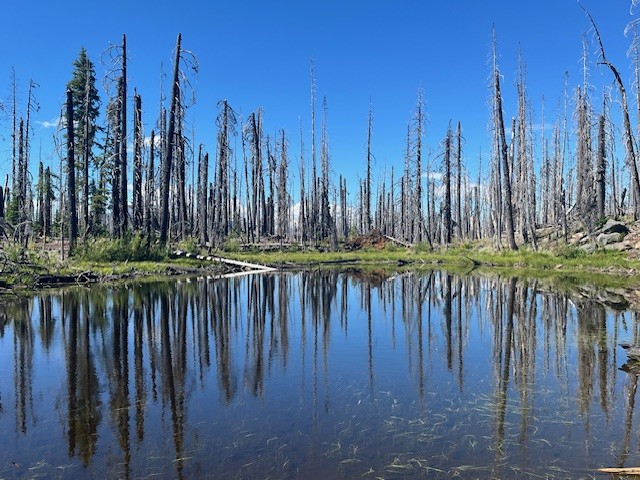
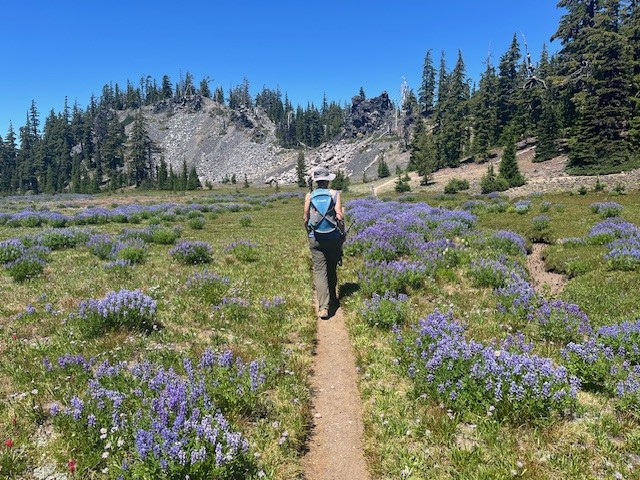
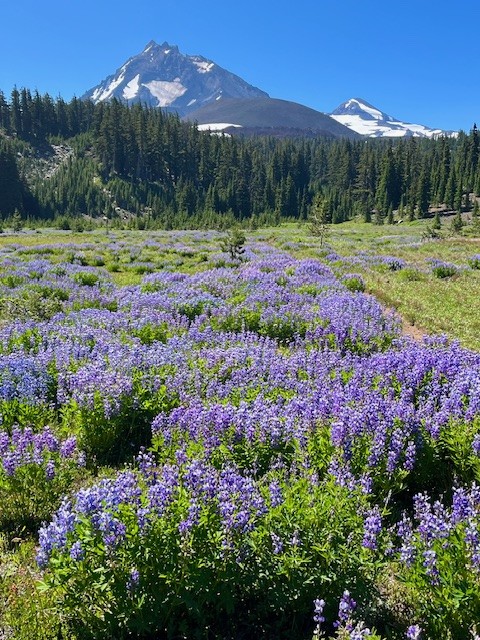
The hike from Lava Camp Lake starts in burned forest, the result of 2017's Milli Fire. However, there remains untouched forest near Matthieu Lakes and the lava fields were natural fire breaks. The meadow, which is the junction for Scott Trail and the PCT, was stunning in July 2025 with the lupines at their peak. California tortoiseshell butterflies were abundant and filled the dry stream beds in the meadow and circled in groups by the lava fields. The total in and back hike from Lava Camp Lake is 15 miles with 2400 feet of elevation gain.
 |
 |
 |
 |
 |
 |
28
Today's Tale of Two Housing Markets
Depending on where you live, the housing market could feel red-hot or strangely quiet right now. The truth is, local markets are starting to move in different directions. In some places, buyers are calling the shots. In others, sellers still hold the power. It's a tale of two markets.
What's a Buyer's Market vs. a Seller's Market?
In a buyer's market, there are more homes for sale and not as many buyers. That means homes sit longer, buyers have more negotiating power, and prices tend to soften as a result. It's simple supply and demand.
On the flip side, a seller's market happens when there aren't enough homes available for the number of people looking to buy them. Because buyers have to compete with each other to get the house they want, that leads to faster sales, multiple offers, and rising prices.
Right now, both of these scenarios are playing out, depending on where you are. So, how do...
Privacy Policy / DMCA Notice / ADA Accessibility


